
Views: 0 Author: Site Editor Publish Time: 2026-08-14 Origin: Site


Industrial decolorization poses a massive operational challenge. Facilities must remove large, complex color molecules from liquid streams. You encounter these bulky molecules as melanoidins or caramel bodies. Operators need to achieve this removal effectively. They must not alter the core product's flavor, nutritional profile, or total yield. Standard microporous carbons often fail in these exact scenarios. They clog quickly when faced with bulky organic molecules. This limitation leads to frequent media changes and process bottlenecks.
Highly porous wood-based alternatives handle these large compounds much better. They offer open structural networks allowing large molecules to penetrate deeply. Engineering, procurement, and quality assurance teams must evaluate these media carefully. We will explore how you can evaluate and implement wood activated carbon for decolorization to achieve consistent product standardization. You will learn the science behind pore structures, purity metrics, and process optimization strategies required for industrial success.
Wood-based carbon possesses a predominantly mesoporous and macroporous structure, making it uniquely capable of trapping large color-forming organic molecules.
Chemical activation (typically using phosphoric acid) yields high-purity carbon with exceptionally low ash content, crucial for food and pharmaceutical applications.
Evaluating wood carbon requires looking beyond basic surface area (BET) to assess pore size distribution, filtration rates, and strict compliance certifications.
Successful implementation demands careful management of powder handling, dosing optimization, and filter press configuration to prevent pressure drops.
Visual standardization remains a critical quality metric across multiple processing industries. Think about sweeteners, edible oils, and organic acids. Customers intrinsically associate clarity and pure color with high product quality. Removing color bodies forms a mandatory step during liquid processing. However, you face significant operational risks if you choose the wrong media.
Incorrect carbon types cause severe downstream issues for plant operators. They clog filter presses rapidly. You end up using excessive amounts of carbon to achieve basic visual targets. Sometimes, the wrong media unintentionally removes vital active ingredients from your liquid. You might also lose valuable liquid product absorbed inside a dense, unmanageable filter cake. These physical losses reduce your overall plant efficiency dramatically.
We define a successful decolorization process through specific measurable metrics. You must balance several competing physical factors during operations.
Target color reduction: You need to reach specific ICUMSA units or APHA color scales reliably on every batch.
Minimum required dosage: You must achieve these clarity targets using the lowest possible media volume.
Stable flow rates: Your filtration equipment cannot suffer from sudden pressure drops or blinded cloths.
Regulatory compliance: You must meet all strict safety, purity, and food-grade standards consistently.
Facilities often struggle to align these four pillars. They compromise flow rates to achieve better color removal. Alternatively, they increase carbon dosage excessively to force a result. You can avoid these pitfalls by matching media characteristics to your exact liquid profile. Complex color bodies demand specialized structural solutions.
Selecting the correct media requires understanding pore size distribution. Activated carbon features three primary pore sizes. Micropores measure under 2 nanometers. Mesopores range between 2 and 50 nanometers. Macropores exceed 50 nanometers. Each raw material naturally develops a different ratio of these pore sizes during the activation process.
Coconut shell carbon contains predominantly microporous structures. It works exceptionally well for trapping small volatile organic compounds (VOCs). You use it primarily for gas phase filtration or drinking water purification. However, coconut carbon proves highly ineffective for large color bodies. Melanoidins physically cannot fit inside these tiny micropores. The carbon surface simply blocks them, rendering the media useless for industrial decolorization.
Coal-based carbon provides a mixed porosity profile. It offers moderate color removal capabilities. Yet, coal carries distinct disadvantages. It typically contains higher levels of leachable heavy metals. It also produces more ash. This poses severe contamination risks during sensitive food and pharmaceutical processing.
Conversely, wood activated carbon dominates in mesopores and macropores. The internal structure resembles a wide, open sponge. These larger channels are perfectly sized to capture bulky organic molecules. They trap and hold large color-forming compounds securely inside the carbon matrix.
Performance metrics shift dramatically based on this physical structure. Wood carbon allows for much faster diffusion rates. Liquid moves freely through the expanded pore network. Complex molecules reach deep adsorption sites quickly. Therefore, you require much shorter contact times during batch processes. Shorter contact times increase your overall plant throughput. You process more liquid batches per shift.
Pore Structure and Source Material Comparison
Source Material | Primary Pore Type | Ideal Use Case | Major Limitation |
|---|---|---|---|
Coconut Shell | Micropores (<2 nm) | Gas/Air, small VOCs | Cannot trap large color molecules. |
Coal (Bituminous) | Mixed Porosity | Wastewater, general liquid | Higher heavy metal and ash content. |
Wood | Mesopores & Macropores | Liquid decolorization, thick fluids | Lower physical hardness than coconut. |
Manufacturers produce activated carbon using two primary methods. They use either physical activation via steam or chemical activation. Wood typically undergoes chemical activation to maximize its structural advantages. You achieve the absolute best decolorization results using phosphoric acid.
Steam activation works well for creating micropores in dense materials. Chemical activation expands the internal structure of wood significantly. It generates the massive mesoporous networks required for complex decolorization. This specific chemical method provides a distinct functional advantage. The phosphoric acid wood carbon process creates specific oxygen surface functional groups. These chemical groups sit permanently on the carbon surface. They carry electrical charges. They actively attract and bind polar color molecules from your liquid stream. You get a powerful combined effect of physical trapping and chemical attraction.
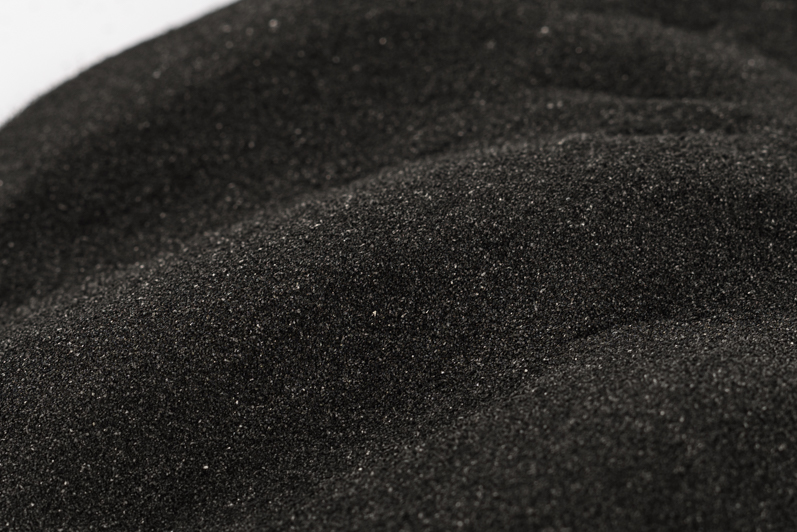
Format matters greatly during these liquid applications. Manufacturers usually grind this activated material down into fine particles. This process results in wood powdered activated carbon (PAC). You dose PAC directly into your liquid process streams. This powder format maximizes external surface area contact. Millions of particles disperse throughout the fluid. You achieve rapid, uniform adsorption before filtering the powder out downstream.
Purity outcomes represent another major benefit of this manufacturing route. Phosphoric acid activation leaves significantly lower residual ash. Decades ago, manufacturers used zinc chloride for chemical activation. Zinc poses severe environmental and toxicity risks. Modern acid-washed wood provides exceptionally clean media. You prevent unwanted mineral leaching into your valuable product stream.
Selecting the right media requires strict evaluation criteria. You cannot rely on basic surface area (BET) measurements alone. High BET surface area does not guarantee good decolorization if the pores are too small. You must analyze specific purity and performance metrics.
Regulators define strict thresholds for extractable heavy metals. You must monitor lead, arsenic, and iron levels closely. Acid-soluble ash content also requires strict limits. High ash leads to scaling on your plant equipment and alters product flavor.
pH standardization plays a vital operational role. You must ensure the pH of the activated carbon matches your process liquid closely. A severe mismatch causes immediate chemical problems. For example, highly acidic carbon can cause sugar inversion during glucose processing. This degrades your product quality and alters the sweetness profile. You must request properly pH-buffered carbon.
Filtration time directly affects your daily operational efficiency. We refer to this metric as filterability. The particle size distribution of the powder dictates performance. Very fine powder provides rapid adsorption. However, it slows down the liquid passing through your filter press. You must find the optimal particle size distribution. It must balance rapid color removal against fast filtration times.
Security and compliance form the foundation of safety principles. You must demand non-negotiable certifications for food-grade activated carbon. Do not accept unverified materials from unknown sources.
FDA compliance for safe food contact and processing.
Food Chemical Codex (FCC) standard adherence for purity.
Halal certification for global market access and consumer trust.
Kosher certification for specific dietary compliance.
ISO 9001 documentation for strict manufacturing quality control.
Evaluation Parameters for Liquid-Phase Carbon
Parameter | Measurement Goal | Impact on Operations |
|---|---|---|
Molasses / Caramel Number | High large-molecule capacity | Determines effectiveness of color removal. |
Acid-Soluble Ash | Minimize leachable minerals | Prevents off-flavors and equipment scaling. |
pH Value | Match process liquid | Prevents chemical degradation (e.g., sugar inversion). |
Particle Size Distribution | Balance speed and flow | Dictates filter press speed and pressure drops. |
Implementing powdered carbon introduces specific operational realities. You must manage handling and safety risks proactively on the factory floor. Powdered carbon generates fine, combustible dust. You must mitigate these dust explosion hazards immediately following safety guidelines. Proper slurry preparation systems help contain the material securely. You mix the dry powder into a liquid slurry in a controlled tank before dosing. We also recommend installing robust ventilation and dust collection systems at all dumping stations.
Optimizing dosage rates prevents severe process failures. We strongly recommend establishing precise dosage parameters first. You should conduct lab-scale isotherm testing before attempting a full plant rollout. Over-dosing wastes expensive material and strains your filter capacity. Under-dosing fails your visual quality checks, requiring costly reprocessing. Isotherm tests map the exact amount of carbon needed per liter of fluid to reach your target color.
Filter press management requires careful, daily attention. You will experience natural pressure drops across the filter cloths. You must sequence your carbon addition correctly. Operators often introduce diatomaceous earth alongside the carbon. This material acts as a highly effective filter aid. It creates a porous, rigid cake on the filter cloth. This structure prevents the fine carbon particles from blinding the filter pores. You maintain steady flow rates while capturing all the spent carbon.
Spent carbon handling presents a final operational hurdle. Facilities often reactivate granular carbons in thermal furnaces for reuse. Powdered wood carbon behaves differently. It is rarely cost-effective or physically possible to reactivate powdered media. The fine particles burn up or blow away during standard thermal regeneration. You must factor this reality into your standard solid waste disposal plans. Treat it as a one-way consumable item.
Selecting the right supplier ensures long-term process stability. You must approach the testing and validation phase logically. Advise your procurement team to request physical samples from multiple suppliers. Do not rely on generic lab water tests provided by the manufacturer. Run competitive adsorption isotherms using your actual process liquid. Real-world liquids contain complex competing molecules. Only process-specific testing reveals true decolorization performance.
Supply chain consistency separates premium suppliers from commodity brokers. You must evaluate a supplier's raw material sourcing carefully. Wood species and origin drastically affect the final pore structure. Consistent raw materials yield consistent batch-to-batch performance. Ask your supplier directly about their raw material traceability. You need strict assurance they will not switch feedstocks unexpectedly.
Finally, evaluate their technical support capabilities. High-quality suppliers offer extensive application engineering support. They do not just sell powder in bags. They assist your engineers with precise dosage calculations. They help troubleshoot filter media optimization and pressure drop issues. They act as dedicated technical partners during your initial plant rollout. Look for transparent data sharing and responsive laboratory support.
Removing large color bodies in liquid-phase applications requires specific physical traits. The mesoporous structure of chemically activated wood carbon serves as the scientifically sound choice. It balances aggressive molecular capture with high-purity processing capabilities. You avoid the clogging and contamination risks associated with coal or coconut alternatives.
To successfully transition your facility to this media, follow these action-oriented next steps:
Identify your exact target color reduction metrics and establish your flow rate baseline.
Request detailed specification sheets and compliance certificates from prospective suppliers to verify food-grade status.
Secure product samples and initiate lab-scale isotherm testing on your unique process liquid.
Consult your engineering team regarding proper slurry injection methods and current filter press capacity.
A: Yes, but powdered formats perform significantly better for rapid batch decolorization. Powdered carbon offers immediate, maximum surface area exposure to the liquid. This vastly accelerates adsorption kinetics. Granular carbon requires the liquid to slowly diffuse deep into the particle. Facilities use granular wood carbon mostly in continuous flow columns where contact times are much longer.
A: High ash content introduces leachable minerals into your process stream. These minerals can cause severe off-flavors in delicate edible oils. In sugar processing, leached metals often catalyze unwanted reactions or cause scaling on heat exchangers. Acid-soluble ash can also degrade product stability over time. Using low-ash, chemically activated wood carbon prevents these downstream contamination issues entirely.
A: The typical dosage rate generally ranges from 0.1% to 2% weight-by-weight (w/w) of the total liquid mass. However, this varies heavily based on the initial color concentration and your target clarity. You must conduct specific adsorption isotherm testing on your actual glucose stream to pinpoint the exact, most efficient dosage for your facility.


