
Views: 0 Author: Site Editor Publish Time: 2026-05-20 Origin: Site


Gas purification is not only about removing odor from an exhaust stream. In many plants, vapor control affects regulatory compliance, solvent recovery value, worker comfort, and production continuity. PL-490 coal columnar activated carbon fits this environment because it is built for fixed-bed gas treatment where strength and activity must work together.
The phrase PL-490 coal columnar activated carbon is not just a product name for search engines. In practical procurement, it describes a media choice that influences adsorption speed, bed life, pressure drop, contamination risk, regeneration planning, and downstream product quality. A purchasing team may compare similar activated carbon grades by iodine value, ash content, mesh size, particle strength, bulk density, and application history, but the final decision should also consider how the carbon behaves inside a real treatment system over weeks or months of operation.
For buyers reviewing technical pages, the product link for PL-490 Coal Columnar Activated Carbon for Gas Purification is a useful starting point because it connects the product grade with its intended process environment. Still, the most successful projects usually go beyond a single data point. They define the inlet stream, target contaminant, flow rate, operating temperature, expected service cycle, vessel design, and replacement procedure before confirming an activated carbon grade.
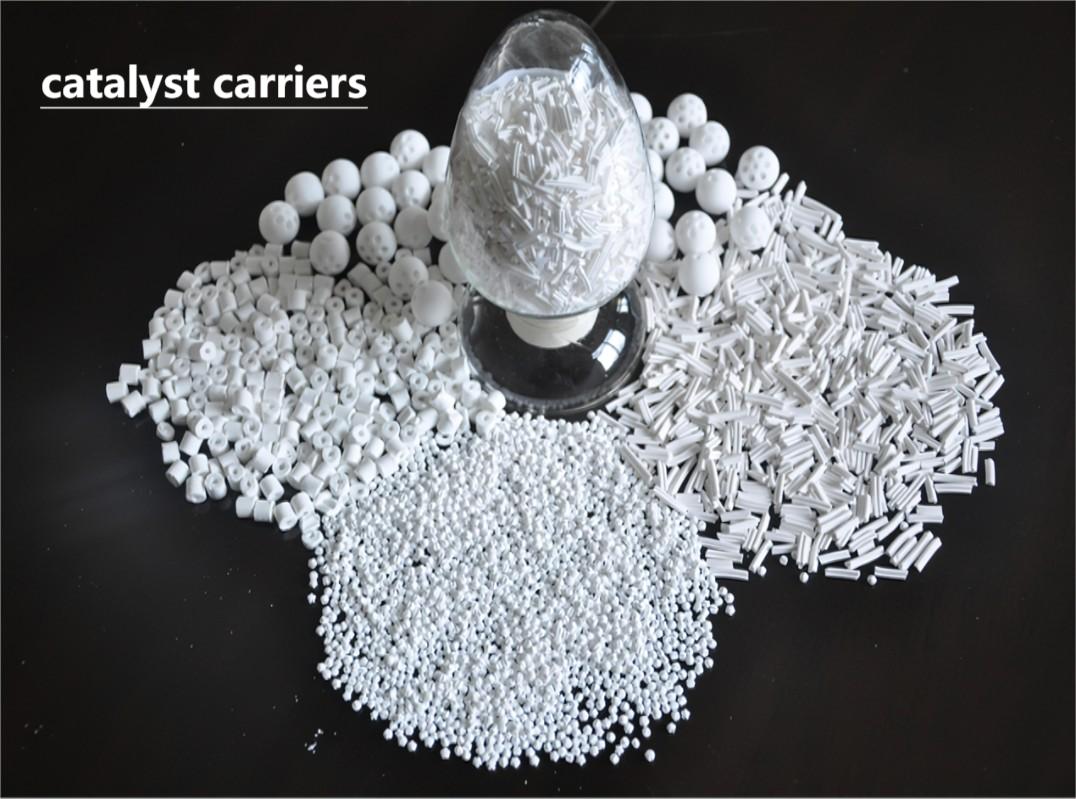
PL-490 Coal Columnar Activated Carbon for Gas Purification is a specialized activated carbon grade in the Coal Columnar Activated Carbon / Air and Gas Treatment category. It is designed for industrial users that require predictable adsorption behavior rather than a general-purpose carbon media. The media selection process begins with the base material, activation method, pore distribution, particle shape, and purity profile. These characteristics determine whether the carbon is better suited for water polishing, gas purification, decolorization, odor control, solvent recovery, or other purification duties.
This grade is manufactured from bituminous coal that is ground, mixed with binder, extruded into columnar particles, and activated by high-temperature steam for gas-phase adsorption work. That base material matters because activated carbon performance is not created by surface area alone. A carbon with high surface area may still perform poorly if the pore structure does not match the target molecule size, if fines generation is too high, if ash introduces unwanted extractables, or if the particle geometry creates unstable bed flow. In B2B applications, those details can affect quality assurance, maintenance cost, and production continuity.
Many buyers initially evaluate activated carbon by one familiar number, such as iodine adsorption value or CTC activity. These values are useful, but they are only part of the picture. Liquid-phase purification often depends on ash, pH, extractable metals, wettability, and fine particle control. Gas-phase purification may depend on CTC activity, pressure drop, hardness, particle uniformity, and humidity tolerance. A strong evaluation treats the product as part of a system, not as an isolated commodity.
Activated carbon works through adsorption, a process in which molecules accumulate on the internal pore surfaces of carbon particles. During activation, raw carbon material develops a network of micro, meso, and macro pores. These pores create the internal surface area that allows the carbon to capture organic molecules, odors, color bodies, residual chemicals, vapor-phase compounds, and selected impurities depending on the grade and application.
The adsorption mechanism depends on both pore size and surface chemistry. Small molecules may be captured efficiently by micropores, while larger color bodies or complex organics may need more mesopore and macropore access. Some industrial systems require low extractables, some need high mechanical strength, and others need low pressure drop. This is why two products that both appear to be activated carbon can behave very differently in real operation.
In a fixed bed, liquid or gas passes through a carbon layer and contacts the carbon particles. As contaminants reach the pore surfaces, they are adsorbed until the carbon approaches exhaustion. Breakthrough begins when the carbon bed can no longer capture the target compound at the required rate. Good system design therefore combines correct grade selection, suitable bed depth, balanced flow velocity, and realistic monitoring intervals.
Before choosing PL-490 coal columnar activated carbon, a buyer should review the main performance factors that influence system stability. The most important factors usually include raw material, activation process, particle size, hardness, ash level, moisture level, bulk density, and application match. A specification sheet helps create the first shortlist, but pilot testing or sample evaluation is often needed when the application is critical.
Factor | Why It Matters |
|---|---|
Raw material | Influences pore structure, purity, hardness, and adsorption behavior. |
Activation method | Affects pore development, surface chemistry, and suitability for gas or liquid phase. |
Particle size | Controls flow resistance, contact time, filtration behavior, and fines risk. |
Ash level | Important for applications where mineral extractables or contamination must be controlled. |
Hardness or intensity | Reduces attrition, dust formation, and media loss during operation or regeneration. |
Bulk density | Affects vessel loading volume, service capacity, and shipping considerations. |
Application fit | Ensures the media targets the right impurity and operating environment. |
A useful buying rule is simple: do not select activated carbon only by the highest number on a datasheet. Higher iodine value, for example, may not solve a color-removal problem if the target molecules are larger than the dominant pore structure. A very hard carbon may not be ideal if the adsorption capacity is mismatched. A low-cost carbon may become expensive if it causes frequent changeouts, high pressure drop, or inconsistent purification results.
The technical data below summarizes product-related information that can be used as a starting point for supplier discussions. Because operating conditions vary by system, the final grade should be confirmed against the actual process stream, equipment design, and target removal objective.
Specification Item | Product Information |
|---|---|
Raw material | Premium bituminous coal |
Particle form | Columnar activated carbon |
Typical iodine value | More than 1050 mg/g |
Typical CTC adsorption value | More than 100% |
Moisture content | Less than 5% |
Bulk density | 350–500 kg/m³ |
Intensity | More than 95 |
Ash content | Less than 15% |
Available diameter | 3.0 / 4.0 mm |
Specifications are most useful when connected to the application. If the product is intended for ultra-pure water, low ash and low extractables may be more valuable than aggressive vapor-phase activity. If the product is designed for gas purification, bed pressure drop and mechanical stability may be more important than liquid decolorization speed. If the product is used in food or pharmaceutical processing, documentation, cleanliness, and batch consistency may become central parts of the purchasing decision.
PL-490 Coal Columnar Activated Carbon for Gas Purification is suitable for applications where the product characteristics match the contamination challenge. Typical use cases may include the following areas:
Industrial VOC emission control
Solvent vapor recovery systems
Gas-phase hydrocarbon removal
Chemical processing ventilation
Fixed-bed industrial gas purification
Each application has its own risk profile. Semiconductor water polishing, for example, may focus on trace organic control and low extractable matter. Beverage production may require clean taste, stable color, and low dust. Gas treatment systems may focus on VOC control, pressure drop, and mechanical strength. Industrial liquid purification may require stable flow and predictable breakthrough. The same activated carbon grade can be useful in several industries, but the buying team should always connect it to a defined performance target.
When a system handles high-value products, process engineers often test carbon samples before bulk purchase. The test can include adsorption performance, rinsing behavior, pH response, ash contribution, particle stability, and pressure drop. A small test can reveal issues that are not obvious from a product name. This is especially important when the carbon is used before sensitive membranes, polishing equipment, high-purity tanks, or customer-facing final products.
Activated carbon buyers often compare several media options before selecting a grade. The comparison below is anonymous and based on common market categories rather than named competitors. It is designed to help purchasing teams understand how a targeted grade can differ from general-purpose alternatives.
Evaluation Area | PL-490 Coal Columnar Activated Carbon for Gas Purification | Competitor A | Competitor B | Industry Average |
|---|---|---|---|---|
Application focus | Designed for a defined purification environment and consistent industrial use. | Broad general-purpose use. | Focused on basic adsorption needs. | Often selected by material category rather than system target. |
Product consistency | Supports repeatable system design when specifications and testing align. | May vary by batch or source. | Often acceptable for non-critical use. | Depends strongly on supplier quality control. |
Technical evaluation | Best assessed by specification match, sample testing, and application data. | Often selected mainly by common indicators. | May require additional validation. | Basic datasheet comparison is common. |
Operating value | Can reduce changeout uncertainty when matched correctly. | May work well for simple applications. | May need more frequent monitoring. | Value depends on system risk and media life. |
Buyer suitability | Suitable for B2B users with defined performance expectations. | Suitable for broad procurement needs. | Suitable for less sensitive processes. | Should be confirmed through testing. |
This type of table should not replace a real trial, but it helps teams move beyond simple price comparison. The best activated carbon is usually the grade that performs reliably in the target system, reduces unplanned maintenance, protects product quality, and supports traceable procurement. For critical uses, the cost of poor media selection can be much higher than the cost difference between two grades.
Choosing PL-490 coal columnar activated carbon begins with a clear process definition. A buyer should first identify whether the system is liquid-phase or gas-phase, batch or continuous, high-flow or low-flow, sensitive or general-purpose. The team should then define the target impurity, expected inlet concentration, required outlet quality, contact time, and acceptable pressure drop. Without this information, even an experienced supplier may not be able to recommend the best grade.
The second step is to define mechanical and handling expectations. Activated carbon particles may experience loading, backwashing, vibration, regeneration, transport, and repeated operation. If the particles break easily, fines may increase and pressure drop may rise. If the particle size distribution is unstable, flow channels may form. If dust is not controlled, startup rinsing and downstream filtration may become more difficult.
The third step is to check compatibility with system design. Vessel diameter, bed depth, flow rate, distributor layout, temperature, humidity, pH, and pre-treatment all affect carbon performance. For example, a grade that performs well in a laboratory column may perform differently in a full-scale vessel if flow distribution is poor. Good media selection therefore works together with equipment design rather than replacing it.
Before confirming a purchase, technical buyers should ask practical questions that reveal whether the grade fits the project. The following checklist can support communication between engineers, purchasing managers, and suppliers.
What is the main target impurity or performance goal?
Is the application liquid-phase, gas-phase, or mixed?
What are the flow rate, temperature, humidity, pH, and contact time?
What pressure drop is acceptable for the system?
Is low ash, low extractable matter, or low dust required?
Does the process need NSF, food-related, pharmaceutical, or internal quality documentation?
Will the carbon be replaced, regenerated, or used once?
What particle size and packaging format are most suitable for loading?
These questions make the buying process more efficient. They also reduce misunderstandings caused by using a generic product name. In many industries, two buyers may use the same phrase, such as granular activated carbon or columnar activated carbon, but one may need ultra-pure water polishing while the other needs odor control. A structured review prevents the wrong product from being selected.
Activated carbon should be stored in a dry, clean, and protected environment. Moisture pickup, contamination, and package damage can affect handling and performance. Bags should be protected from direct exposure to water, dust, strong odors, and chemicals. When the carbon is used for sensitive applications, storage procedures should be aligned with internal quality requirements.
During loading, operators should reduce particle breakage and avoid excessive dust generation. Depending on the system, the carbon bed may require pre-wetting, rinsing, or conditioning before full operation. Start-up procedures should be documented because initial rinse water or first outlet gas may differ from steady operation. For high-purity water systems, startup flushing is often a key part of process acceptance.
During operation, performance should be monitored with relevant indicators. These may include outlet concentration, pressure drop, taste, color, odor, TOC, conductivity, or process-specific test data. The monitoring method should match the reason the carbon is used. Replacing carbon too early wastes resources, while replacing it too late may allow breakthrough and affect downstream processes.
Quality control is essential in activated carbon procurement because the media becomes part of a larger purification chain. Buyers should request documentation that supports material identity, specification compliance, and batch consistency. Depending on the application, this may include a certificate of analysis, particle size report, ash information, moisture data, adsorption indicators, and packaging traceability.
For regulated or sensitive industries, documentation may be as important as physical performance. Beverage, pharmaceutical, semiconductor, and critical water applications often require controlled supplier review. A stable supplier should be able to discuss product selection, sampling, test methods, and batch-to-batch quality expectations in a clear way. This helps buyers build internal confidence before scaling the purchase.
Document review should also consider whether the stated values are relevant to the application. A gas-phase carbon may list CTC activity because vapor adsorption matters. A water-polishing carbon may list ash or extractables because contamination control matters. A spherical carbon may list bead size and hardness because flow and attrition matter. The right document is the one that connects specification data to real use.
One common mistake is treating all activated carbon products as interchangeable. The market uses broad labels, but raw material, activation method, particle form, pore structure, purity, and application design create meaningful differences. Selecting a carbon only because the product name sounds familiar can lead to poor performance.
A second mistake is focusing on a single value. Iodine value, CTC activity, ash content, and hardness are useful, but none of them tells the entire story alone. A balanced specification review is more reliable than choosing the highest number in one category. The selected carbon should match the contaminant, fluid, vessel, and operating cycle.
A third mistake is ignoring startup and maintenance. Even a suitable carbon can underperform if it is loaded incorrectly, rinsed poorly, exposed to contamination, or operated beyond breakthrough. Procurement teams should involve operators and process engineers early, not only purchasing staff. This helps the final grade support actual production rather than only meeting a purchasing checklist.
Before ordering PL-490 Coal Columnar Activated Carbon for Gas Purification, a procurement team should turn the product requirement into an implementation plan. This plan should not be limited to the product name or the requested quantity. It should describe the operating problem, the current treatment method, the desired improvement, and the way success will be measured. For PL-490 coal columnar activated carbon, this usually means defining the feed stream, target impurity, expected outlet quality, replacement cycle, and packaging preference before a final order is confirmed.
The first planning step is to collect real operating data. If the media will be used in water treatment, the team should review flow rate, contact time, pH, conductivity, organic load, and any downstream sensitivity. If the media will be used in gas treatment, the team should record air volume, vapor composition, humidity, temperature, pressure drop limits, and bed dimensions. These details help prevent a common buying mistake: selecting a carbon that looks suitable by name but does not match the actual process environment.
The second planning step is to prepare a sample test or trial run when the application is important. A trial may check adsorption behavior, start-up rinsing, dust level, pressure drop, color removal, odor control, or breakthrough timing depending on the system. The goal is not only to prove that the carbon can work, but also to understand how it should be loaded, conditioned, monitored, and replaced. This practical knowledge makes later bulk purchasing smoother and reduces uncertainty during scale-up.
The third planning step is to confirm documentation and logistics. Industrial users often need packaging details, batch identification, certificates, safety documents, and shipping plans. These details are easy to ignore at the beginning, but they matter during warehouse receiving, internal audits, and production scheduling. A clean procurement process connects product performance, documentation, delivery, and after-sales communication into one decision.
The real value of activated carbon is measured over its service life, not only at the time of purchase. A grade that lasts longer, produces fewer fines, rinses more predictably, or keeps pressure drop stable may create stronger operating value than a cheaper media that needs frequent replacement. This is why experienced buyers often calculate total operating impact instead of comparing only a single unit cost.
Lifecycle value includes several hidden factors. The first is media changeout frequency. A longer and more predictable changeout cycle can reduce labor planning issues and avoid emergency replacement. The second is downtime risk. If a carbon bed reaches breakthrough earlier than expected, production quality may be affected. The third is waste handling. Spent carbon management, packaging disposal, and replacement logistics all add cost and operational complexity.
Another part of lifecycle value is system protection. In sensitive production environments, activated carbon may protect membranes, polishing resins, catalyst beds, product quality, or emission compliance. When it performs correctly, its contribution may be indirect but significant. When it performs poorly, downstream problems can be expensive to diagnose. A careful selection process therefore protects both the treatment system and the production line that depends on it.
For this reason, buyers should keep records after installation. Useful records include loading date, batch number, inlet quality, outlet quality, pressure drop trend, changeout date, and unusual operating events. Over time, these records help refine the grade selection and improve future orders. Activated carbon purchasing becomes more reliable when it is supported by operating history rather than repeated guesswork.
A: It is used for targeted purification applications where the product characteristics match the fluid stream, contaminant type, and operating system. Typical uses include water polishing, gas purification, odor control, decolorization, or other industrial adsorption duties depending on the grade.
A: Buyers should compare raw material, activation method, particle size, adsorption indicators, ash level, hardness, density, application history, and sample test results. A practical comparison should include system conditions, not only datasheet values.
A: No. Iodine value is useful for understanding micropore adsorption, but it does not guarantee the best performance for every contaminant. Larger molecules, vapor-phase compounds, color bodies, or sensitive water systems may require other characteristics.
A: Particle size affects pressure drop, contact time, flow distribution, filtration behavior, and dust risk. The best particle size depends on the vessel design and the phase of the application.
A: Testing is recommended for critical applications. A sample or pilot test can confirm adsorption behavior, rinsing requirements, pressure drop, and compatibility with the real process stream.
A: Common documents include product specifications, certificates of analysis, particle size data, moisture information, adsorption indicators, packaging details, and any application-specific quality documents needed by the buyer.
PL-490 is a practical choice when a gas-phase system needs columnar media with strong adsorption activity, controlled pressure drop, and mechanical stability. The strongest results come when buyers match the carbon to the vapor load, humidity level, vessel size, and regeneration or replacement plan.


