
Views: 0 Author: Site Editor Publish Time: 2026-04-13 Origin: Site


How clean is your carbon? Standard filtration often fails in ultra-pure environments. Pickled Coconut Shell Activated Carbon solves this by removing residual ash and minerals through acid-washing. In this post, you will learn why this premium grade ensures long-term process stability.
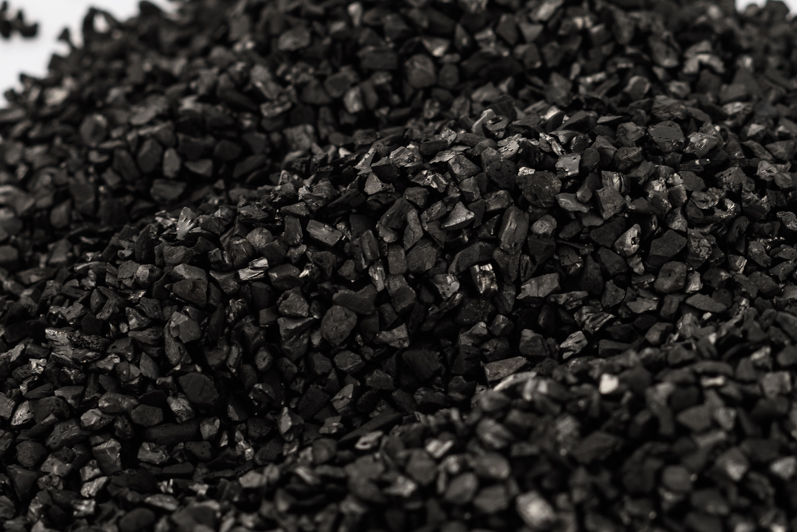
● Definition of Purity: Pickled Coconut Shell Activated Carbon is a high-performance material that undergoes an acid-washing (pickling) step to remove inorganic impurities, minerals, and residual ash left over from the carbonization and steam activation processes.
● Superior Material Properties: This carbon type features exceptional microporosity (pores <2nm), superior hardness (95–99%), and significantly lower ash content (<0.5%) compared to standard grades.
● Application-Specific Selection: While standard coconut shell carbon is a industry benchmark, "pickled" versions are non-negotiable for ultra-pure water (UPW) in electronics, pharmaceutical API purification, and high-end beverage production where mineral leaching must be zero.
● Performance Metrics: High-quality pickled carbon consistently achieves iodine numbers between 1000–1200 mg/g, indicating a high capacity for capturing small molecules and gold-cyanide complexes.
● Economic Value Proposition: Despite a higher upfront price point, pickled carbon reduces operational costs by minimizing "black water" rinse time, protecting downstream membranes, and offering a longer service life in demanding environments.
● Market Dynamics: Rising gold prices have significantly increased the global demand for high-quality coconut carbon, leading to market volatility and rising prices.
The journey begins with mature coconut shells, which serve as the ideal foundation due to their natural density and high carbon content. We transform these shells through a precise manufacturing sequence. First, they undergo carbonization in oxygen-limited environments at 500-700°C. This is followed by steam activation at temperatures ranging from 800-1000°C to create the complex internal pore network.
The defining "Pickling" phase occurs after activation. We treat the carbon with acids like HCl (Hydrochloric) or HNO₃ (Nitric). This chemical bath dissolves residual minerals, metal salts, and surface ash that steam alone cannot remove. After the acid wash, the carbon undergoes thorough neutralization and rinsing to achieve a stable pH before it is dried and packaged for industrial use.
Process Stage | Action | Purpose |
Raw Material | Mature Coconut Shells | High density, low initial ash |
Carbonization | Heating at 500-700°C | Creates basic carbon structure |
Activation | Steam treatment at 800-1000°C | Develops microporous network |
Pickling | Acid-Washing (HCl/HNO₃) | Removes inorganic impurities and ash |
Neutralization | Water rinsing | Stabilizes pH for sensitive applications |
Pickling offers several technical upgrades that standard carbon cannot match. The most immediate benefit is a drastic reduction in ash content. While standard coconut shell carbon typically has an ash level below 3%, pickling can bring this down to ultra-low levels, often reaching less than 0.5%. This prevents "ash leaching," which can contaminate high-purity process streams.
Furthermore, the process ensures pH neutralization and stabilization. Standard activated carbon often causes an initial pH spike when first submerged in water, which can interfere with chemical reactions or delicate biological processes. Pickling also clears the micropore network (pores under 2nm) of manufacturing dust and debris. This enhances pore accessibility, allowing the carbon to reach its maximum theoretical iodine number performance, typically between 1000-1200 mg/g.
● Removal of Heavy Metals: Acid-washing is non-negotiable for removing residual iron, calcium, and magnesium that occur naturally in coconut shells.
● Minimized Silica Leaching: This is a critical benefit for ultra-pure water systems in the electronics industry, where silica can damage equipment.
● Consistent Adsorption Kinetics: Pickled carbon provides more predictable results in high-flow environments because the surface is chemically "clean".
● Lower Conductivity: Essential for pharmaceutical and electronics applications where ionic purity is mandatory.
The choice between pickled and unwashed carbon often comes down to chemical stability. Unwashed carbon can cause "black water" or turbidity issues during the initial startup of a system as fines and minerals wash away. Pickled coconut shell activated carbon eliminates this problem, saving hours of rinsing time and thousands of gallons of water.
When evaluating the cost-benefit ratio, it is important to look beyond the higher upfront price. They offer a longer service life because the pores are fully accessible from day one, and they reduce the burden on downstream equipment like reverse osmosis membranes and ion-exchange resins. While pickling does not significantly change the CTC (Carbon Tetrachloride) number, it ensures the existing capacity is utilized more efficiently.
Feature | Standard Coconut Shell Carbon | Pickled Coconut Shell Carbon |
Ash Content | < 3.0% | < 0.5% (Typical) |
Initial pH Effect | Can cause alkaline spikes | Stable / Neutral |
Rinse Time | Moderate to High | Minimal |
Pore Access | May be restricted by debris | Fully accessible |
Cost | Baseline | Premium (20-40% higher) |
Ultra-Pure Water (UPW) production is perhaps the most demanding application. In semiconductor and electronics manufacturing, even parts-per-billion levels of minerals can ruin a production batch. They rely on pickled carbon as a primary polishing step to ensure zero-impurity standards.
In pharmaceutical API (Active Pharmaceutical Ingredient) purification, the carbon must not introduce any new contaminants into the ingredients. Pickled grades meet the stringent requirements of the US FDA and European Pharmacopoeia by providing a high-purity adsorption medium. Similarly, high-end beverage and food processing use it to eliminate off-tastes without adding mineral bitterness. Even in specialized gold recovery, some mines use pickled carbon to minimize the generation of "carbon fines," which can lead to gold loss during the elution process.
When procuring Pickled Coconut Shell Activated Carbon, you must look beyond the iodine number. High-quality suppliers provide detailed certificates of analysis that specify ash levels, soluble matter, and extractable heavy metals. Particle size distribution is also critical; for example, gold recovery typically requires a 6x12 mesh, while water treatment might use a 12x40 mesh.
Proper commissioning is vital to maximizing the benefits of your pickled carbon. Even though it is pre-washed, we still recommend a brief pre-wetting and backwash to remove any dust created during shipping. This ensures the filter bed is settled and prevents air pockets that could cause channeling.
Monitoring for breakthrough is the key to maintaining water or product quality. Technical indicators include a rise in the effluent's TOC (Total Organic Carbon) or a change in the conductivity of the treated fluid. While coconut shell carbon can be thermally regenerated 3-5 times, be aware that repeated thermal cycles may slowly increase the ash content as the carbon structure wears down. For ultra-purity applications, many facilities choose to use virgin pickled carbon for every cycle to ensure absolute consistency.
● Regeneration: Can be done 3-5 times at 800-900°C, but purity may slightly decrease with each cycle.
● Disposal: Must follow local regulations, especially if it has adsorbed toxic organics or heavy metals.
Does pickling affect the hardness of the carbon? Generally, no. High-quality coconut shell carbon maintains a hardness of 95-99% even after acid-washing. The process targets surface impurities rather than the carbon's structural integrity.
What acid is most commonly used for pickling coconut shell carbon?Hydrochloric acid (HCl) is the industry standard for general high-purity needs. Nitric acid (HNO₃) is sometimes used when specific mineral extractions are required, though it is more expensive.
Is pickled carbon necessary for basic municipal water treatment?Usually, it is not required for basic taste and odor control. However, it is highly recommended for "polishing" steps or when the treated water will feed into industrial boilers or cooling towers where scale prevention is critical.
How do I compare the price of pickled carbon to coal-based alternatives?Coconut shell carbon is naturally more expensive than coal-based options due to raw material limits. Adding the pickling step increases this premium, but the superior loading capacity and lower ash often lead to lower long-term operational costs.
Pickled Coconut Shell Activated Carbon provides ultra-low mineral content for sensitive industrial processes. This high-purity adsorbent from purestarcarbon ensures cleaner results in electronics and pharmaceuticals. Its unique structure justifies the premium price by reducing maintenance costs and improving efficiency. By choosing these specialized grades, you secure long-term savings and superior operational success for your most demanding purification needs.
A: No, Pickled Coconut Shell Activated Carbon maintains 95-99% hardness while targeting surface impurities.
A: Pickled Coconut Shell Activated Carbon meets stringent standards by ensuring no mineral leaching into active ingredients.
A: It commands a premium price due to the additional acid-washing process and superior purity.


